
TXGA公告
【Notice】:TXGA Spring Festival holiday is from February15, 2026 to February23, 2026, a total of nine days, and work will resume on February 24, 2026. During the holiday, the website can place orders normally, and delivery will be arranged after the holiday. If you have any questions, you can send an email to the business manager: philomena.li@txga.com.
TXGA连接器厂家 Building Technology Cornerstone
{{ getLanguageDisplayName(lang) }} | CN | CNY
Your current browser version is too low or not supported. Please upgrade or change your browser. Recommended browsers: Chrome, Edge.
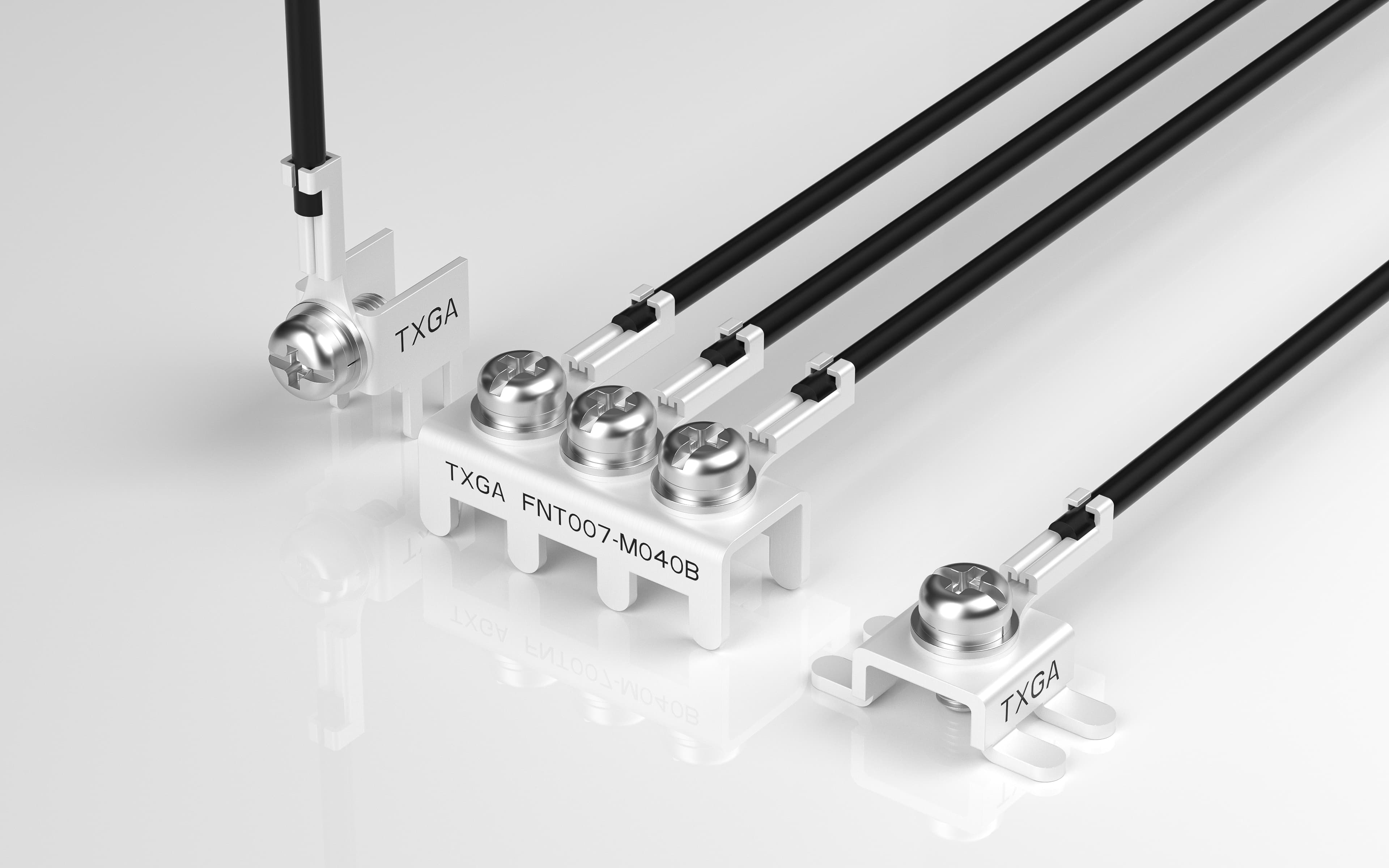
TXGA nut terminals meet the application requirements of high current transmission on PCB boards

In the current booming development of new energy equipment, the demand for high current transmission on PCB boards is increasing day by day. As a key component in the wiring process, the importance of nut terminals is becoming increasingly significant.

TXGA nut terminals are made of brass plated with tin and equipped with stainless steel gaskets. This design not only endows the product with excellent conductivity, but also enables it to easily withstand large torques. The product also supports two installation methods: through-hole welding and surface mount, which users can flexibly choose according to their actual needs. After installation, simply combine the nut terminal with the screw and wiring nose to quickly complete the wiring work. When maintenance is needed, simply loosen the screws to easily replace the wiring nose, greatly improving the convenience and flexibility of use.

TXGA nut terminals are available in various specifications such as M3, M4, M5, M8, etc. to meet the wiring needs in different scenarios. Its rated current is as high as 120A, which can easily cope with the challenges of high current transmission. At the same time, the product also has excellent environmental adaptability and can work stably in a wide temperature range of -40 to 120 ℃.

At present, TXGA nut terminals are widely used in various fields such as new energy, telecommunications, computers, transportation, industrial electronics, and medical electronics.